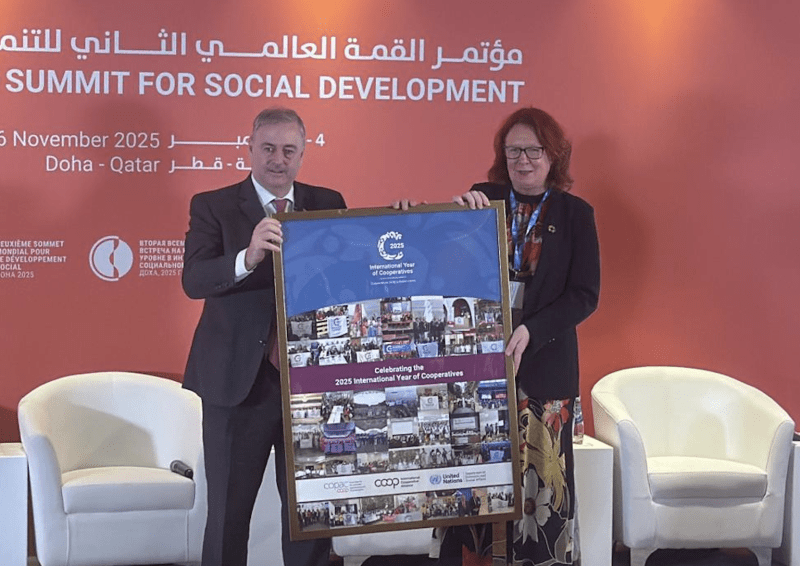
The Closing Ceremony of IYC2025 took place on 4 November from11.30 to 12.45 at the Qatar National Convention Centre, Doha, alongside the Second World Summit for Social Development (WSSD2). Themed around the cooperative contribution to social justice, decent work, and sustainable development, the event will feature opening statements and keynote speeches by Heads of State and senior UN representatives, followed by the launch of the CM50 Manifesto and Commitment Plan by ICA President Ariel Guarco. A roundtable of cooperative leaders from key sectors—including agriculture, finance, housing, health, insurance, fisheries, consumer, and worker cooperatives—will showcase the movement’s global impact and innovation.
Visitors to the Summit were also invited to explore the IYC exhibition booth (#28.S, Exhibition Hall 6), presented by COPAC, which highlights how cooperatives contribute to the SDGs and drive inclusive and sustainable development worldwide.
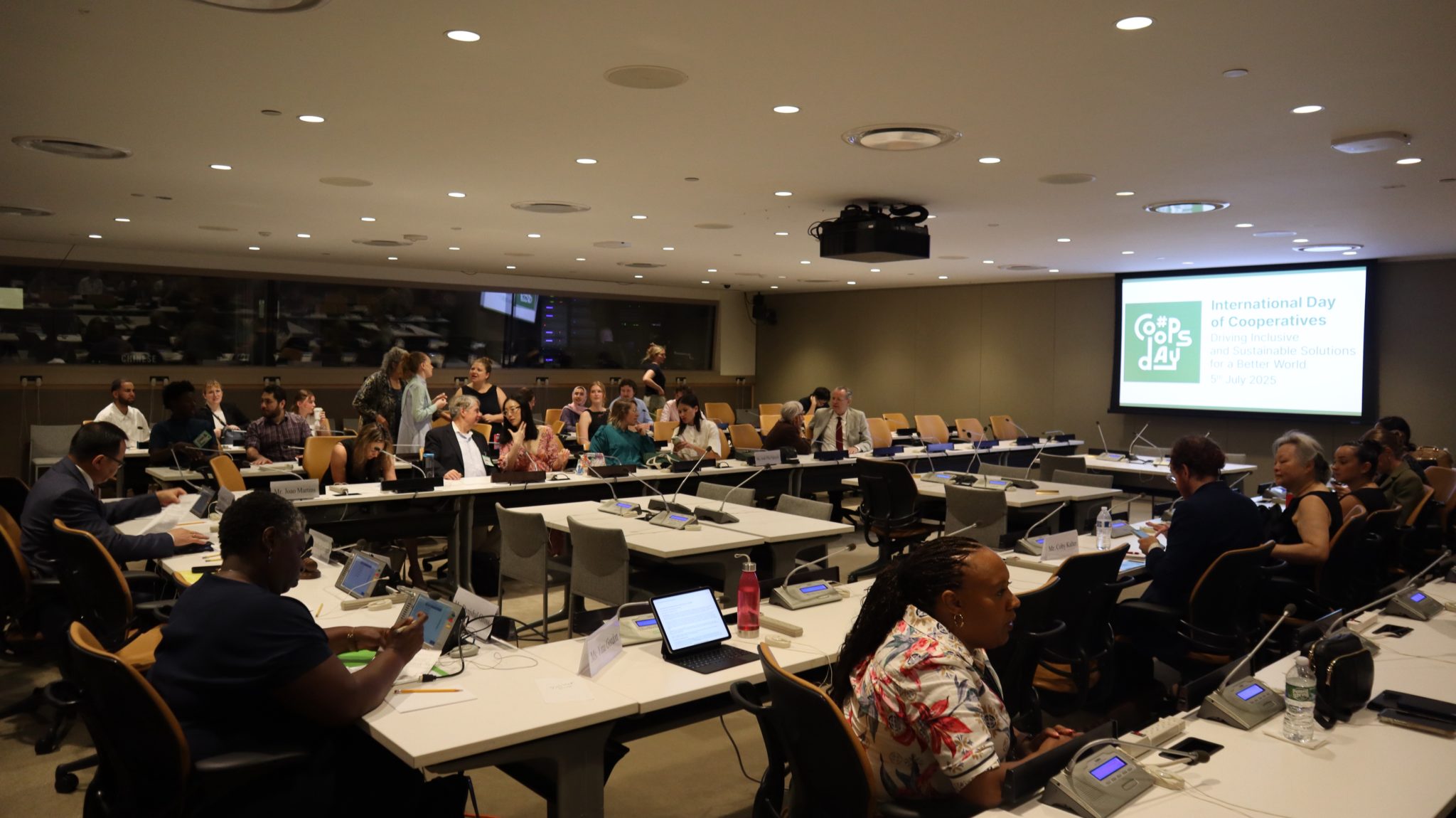
The United Nations commemorated the 2025 International Day of Cooperatives with a high-level celebration at its New York Headquarters, recognizing the pivotal role of cooperatives in building more inclusive, democratic, and sustainable societies. Held during the International Year of Cooperatives 2025, the event convened global leaders under the theme: “Driving Inclusive and Sustainable Solutions For A Better World”.
The opening segment was moderated by the COPAC Chair and featured high-level statements from:
Charles Katoanga, Director of UN DESA’s Division for Inclusive Social Development, who called cooperatives “people-centred, democratic organizations” that embody the vision of the Copenhagen Declaration and offer tangible solutions for equity, participation, and human dignity.
E. Ankhbayar Nyamdorj, Permanent Representative of Mongolia, who highlighted Asia-Pacific’s dynamic cooperative landscape and Mongolia’s national initiatives, including a multibillion-dollar loan programme to strengthen rural cooperatives.
E. Ekitela Lokaale, Permanent Representative of Kenya (represented by Deputy Permanent Representative Jabesh Morani), who emphasized the role of cooperatives in Kenya’s economy—contributing 45% of the national GDP—and called for a stronger global enabling environment.
Dynishal Gross, Commissioner of the NYC Department of Small Business Services, who showcased New York City’s public investment in cooperatives, noting that the city now hosts the largest number of worker cooperatives in the United States thanks to the Worker Cooperative Business Development Initiative.
The event included two thematic panels. The first highlighted how financial cooperatives are embedding impact across climate resilience, community inclusion, and member empowerment—from Vancouver’s Vancity to Ireland’s credit union networks. The second explored how municipal governments and civil society are fostering worker cooperatives, using New York City as a leading example of inclusive policy innovation. International perspectives were also spotlighted, including a compelling presentation by João Martins of UNI CAFES (Brazil), who shared how family farming cooperatives in Brazil are advancing climate justice, food security, and rural transformation.
The celebration underscored that cooperatives are not peripheral actors—but essential engines of social progress and sustainable development. As the world prepares for the Second World Summit for Social Development (4–6 November 2025, Doha), the cooperative model continues to prove that economic success can be rooted in solidarity, dignity, and inclusion.
“This is an important moment for cooperatives to demonstrate their unique value in accelerating social development”, said Mr. Katoanga. “Let us together support and leverage the cooperative model to build a more just, inclusive, and sustainable world for generations to come.”
The event focused on the importance of equitable access to the digital economy as outlined in the forthcoming Pact for the Future and the Global Digital Compact. Emphasizing international cooperation, the session explored how cooperatives harness technology to drive sustainable development, enhance business processes, and improve member benefits. Simel Esim, Head of the COOP/SSE Unit at the International Labour Organization, gave opening remarks followed by key speakers included H.E. Mr. Ankhbayar Nyamdorj, Permanent Representative of Mongolia, and H.E. Ms. Njambi Kinyungu, Deputy Permanent Representative (DPR) of Kenya. They each highlighted the importance of the cooperative movements within their respective countries and stressed the importance of introducing cooperative products and services tailored to youth, strengthening partnerships, and bridging the digital divide through international cooperation. Mr. Jeroen Douglas, Director General of the International Cooperative Alliance, described the cooperative movement as “globalization from below,” emphasizing its resilience amid multilateral challenges.
Panel Discussions
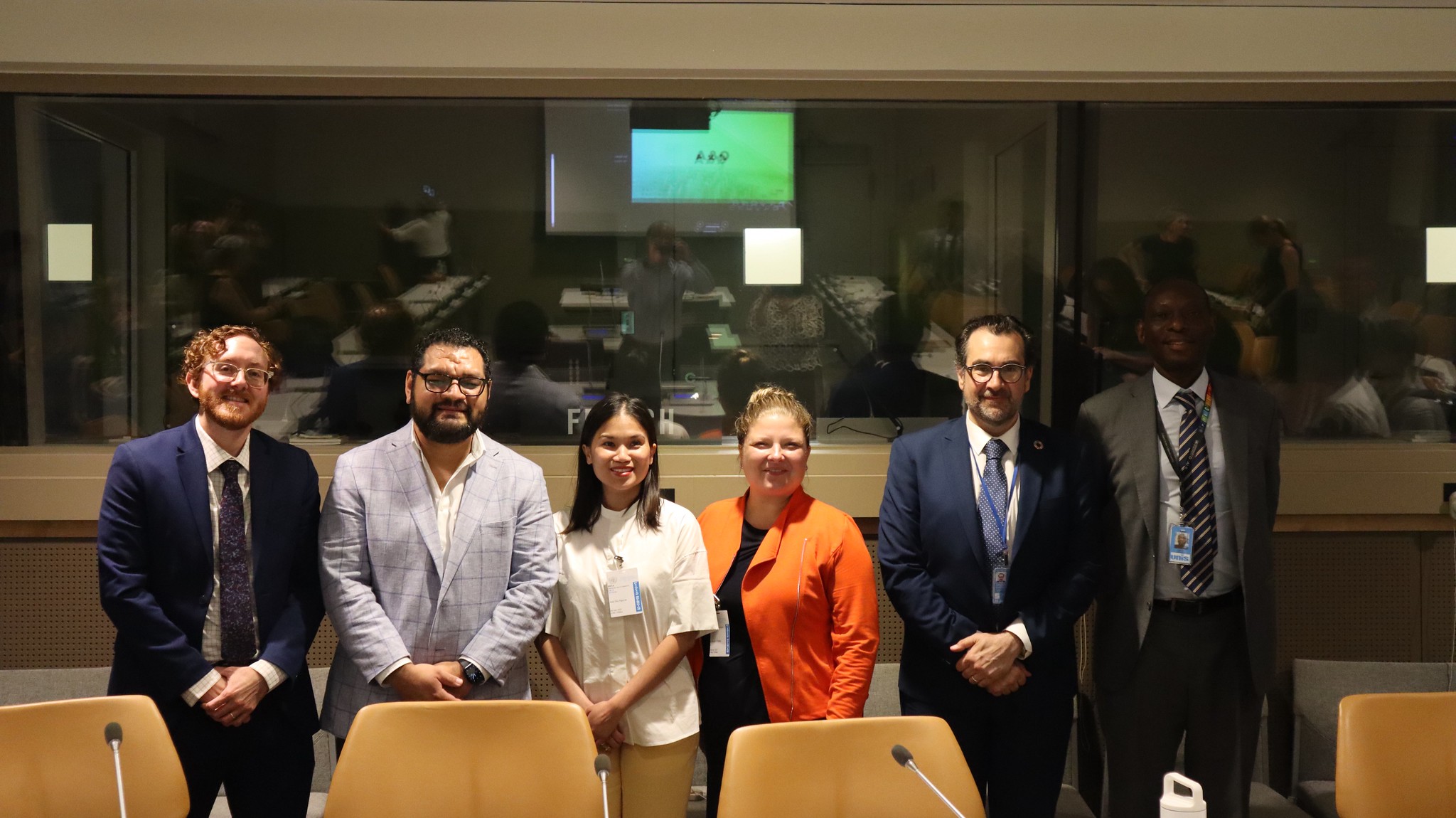
The panel discussions, moderated by Ilcheong Yi from the United Nations Research Institute for Social Development, focused on youth engagement and technological innovation within cooperatives. Panelists explored the intersection of cooperatives, youth and technology and highlighted relevant examples from regions around the world:
Tom Ivey, Community Development Manager at dot.coop, highlighted the importance of digital transformation within cooperatives. He discussed the Cooperative World Map project, which addresses data gaps and enhances the visibility of cooperatives globally. Ivey emphasized the need for cooperatives to adopt youth-driven innovations and digital tools to improve member engagement and expand their global impact.
Francesca Martinelli, Director of Centro Studi Doc Foundation, focused on the alignment of cooperative values with the priorities of young people, particularly in Europe. She highlighted the European Union’s regulatory framework for ethical digital governance, positioning cooperatives as leaders in responsible technology use. Martinelli called for greater awareness of the cooperative model among youth, promoting it as an ethical alternative to traditional business models.
Salma Hachimi Alaoui, President of Innovtention Cooperative in Morocco, shared how her cooperative addresses environmental issues through sustainable battery manufacturing. By regenerating used lithium cells, Innovtention not only promotes sustainability but also creates job opportunities for young people. Alaoui emphasized the potential of cooperatives to empower youth and foster innovative business models in Africa.
Kishor Kumar, Chief Project Coordinator at ULCCS in India, was unable to attend the event live, but provided a video recording highlighting the cooperative’s evolution through mechanization and digitalization. He underscored the importance of research, innovation hubs, and youth-focused training programs to foster creativity and sustain cooperative growth. Kumar showcased ULCCS’s efforts in integrating young talent into leadership roles and advancing sustainable development goals.
Lucila Domínguez from the Argentine Federation of Technology Innovation and Knowledge Work Cooperatives (FACTTIC) discussed how her cooperative supports youth through training, incubation platforms, and advocacy. She emphasized building networks like PATIO, which connects technology-based cooperatives globally, facilitating collaboration and youth engagement across regions.
Wrap Up
The panel was followed by an interactive Q&A led by Joseph Njuguna, from the International Cooperative Alliance, where participants discussed the challenges and opportunities for cooperatives in adopting technology, strengthening governance, and engaging youth, with a focus on practical solutions, capacity building, and the importance of creating ethical and sustainable cooperative models globally.
The session concluded with Ilcheong Yi thanking the participants and event sponsors while emphasizing that “youth are both the present and future” and remain increasingly relevant to the UN Pact for the Future. Andrew Alimadi from UN DESA provided a call to action, urging increased collaboration and knowledge sharing at the international level. As the world prepares for the International Year of Cooperatives 2025, COPAC and its partners reaffirmed their commitment to advancing cooperatives as key drivers of sustainable development, equity, and inclusive growth.
The full recording of the session can be viewed here.
About COPAC
COPAC is a multi-stakeholder partnership that promotes and advances cooperatives as sustainable and people-centered business models. Its members include the United Nations Department of Economic and Social Affairs, International Labour Organization (ILO), Food and Agriculture Organization (FAO), International Trade Centre (ITC), United Nations Research Institute for Social Development (UNRISD), and the International Cooperative Alliance (ICA).
About the Summit of the Future
The Summit of the Future is a UN-led global event aimed at addressing key challenges and shaping a more sustainable and equitable world. Bringing together governments, civil society, and international organizations, the Summit focuses on advancing multilateral cooperation, promoting digital inclusion, and accelerating progress towards the Sustainable Development Goals. This online side event reflects the commitment of the Pact for the Future to “Strengthen North-South cooperation, South-South and triangular cooperation to build capacity for and improve access to science, technology and innovation, and to increase resources for the implementation of technical and scientific initiatives.”