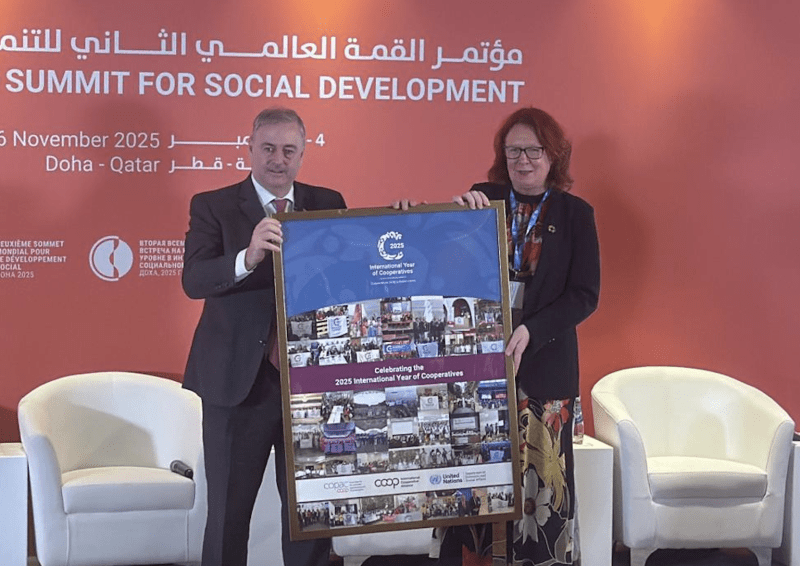
The Closing Ceremony of IYC2025 took place on 4 November from11.30 to 12.45 at the Qatar National Convention Centre, Doha, alongside the Second World Summit for Social Development (WSSD2). Themed around the cooperative contribution to social justice, decent work, and sustainable development, the event will feature opening statements and keynote speeches by Heads of State and senior UN representatives, followed by the launch of the CM50 Manifesto and Commitment Plan by ICA President Ariel Guarco. A roundtable of cooperative leaders from key sectors—including agriculture, finance, housing, health, insurance, fisheries, consumer, and worker cooperatives—will showcase the movement’s global impact and innovation.
Visitors to the Summit were also invited to explore the IYC exhibition booth (#28.S, Exhibition Hall 6), presented by COPAC, which highlights how cooperatives contribute to the SDGs and drive inclusive and sustainable development worldwide.
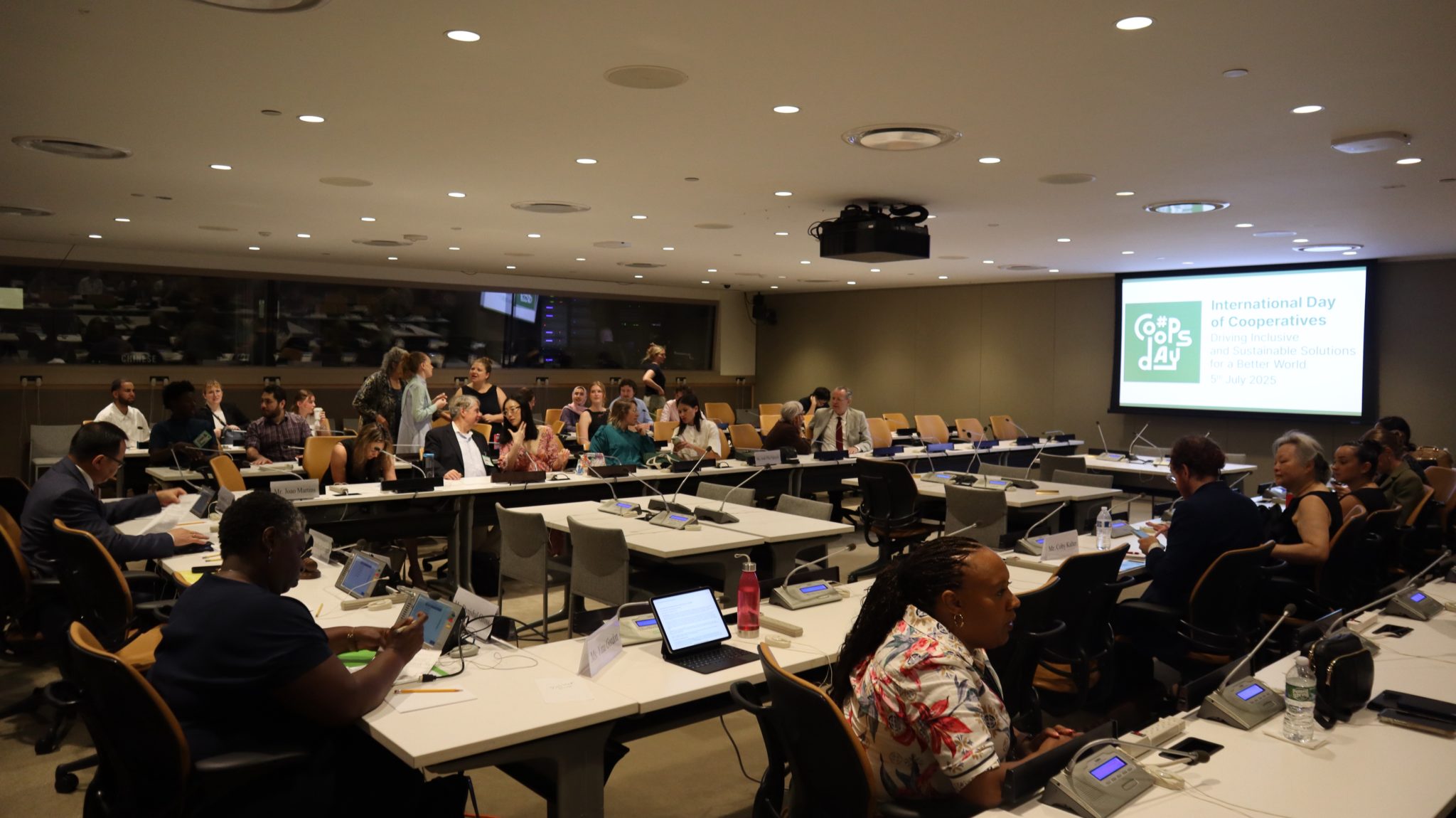
The United Nations commemorated the 2025 International Day of Cooperatives with a high-level celebration at its New York Headquarters, recognizing the pivotal role of cooperatives in building more inclusive, democratic, and sustainable societies. Held during the International Year of Cooperatives 2025, the event convened global leaders under the theme: “Driving Inclusive and Sustainable Solutions For A Better World”.
The opening segment was moderated by the COPAC Chair and featured high-level statements from:
Charles Katoanga, Director of UN DESA’s Division for Inclusive Social Development, who called cooperatives “people-centred, democratic organizations” that embody the vision of the Copenhagen Declaration and offer tangible solutions for equity, participation, and human dignity.
E. Ankhbayar Nyamdorj, Permanent Representative of Mongolia, who highlighted Asia-Pacific’s dynamic cooperative landscape and Mongolia’s national initiatives, including a multibillion-dollar loan programme to strengthen rural cooperatives.
E. Ekitela Lokaale, Permanent Representative of Kenya (represented by Deputy Permanent Representative Jabesh Morani), who emphasized the role of cooperatives in Kenya’s economy—contributing 45% of the national GDP—and called for a stronger global enabling environment.
Dynishal Gross, Commissioner of the NYC Department of Small Business Services, who showcased New York City’s public investment in cooperatives, noting that the city now hosts the largest number of worker cooperatives in the United States thanks to the Worker Cooperative Business Development Initiative.
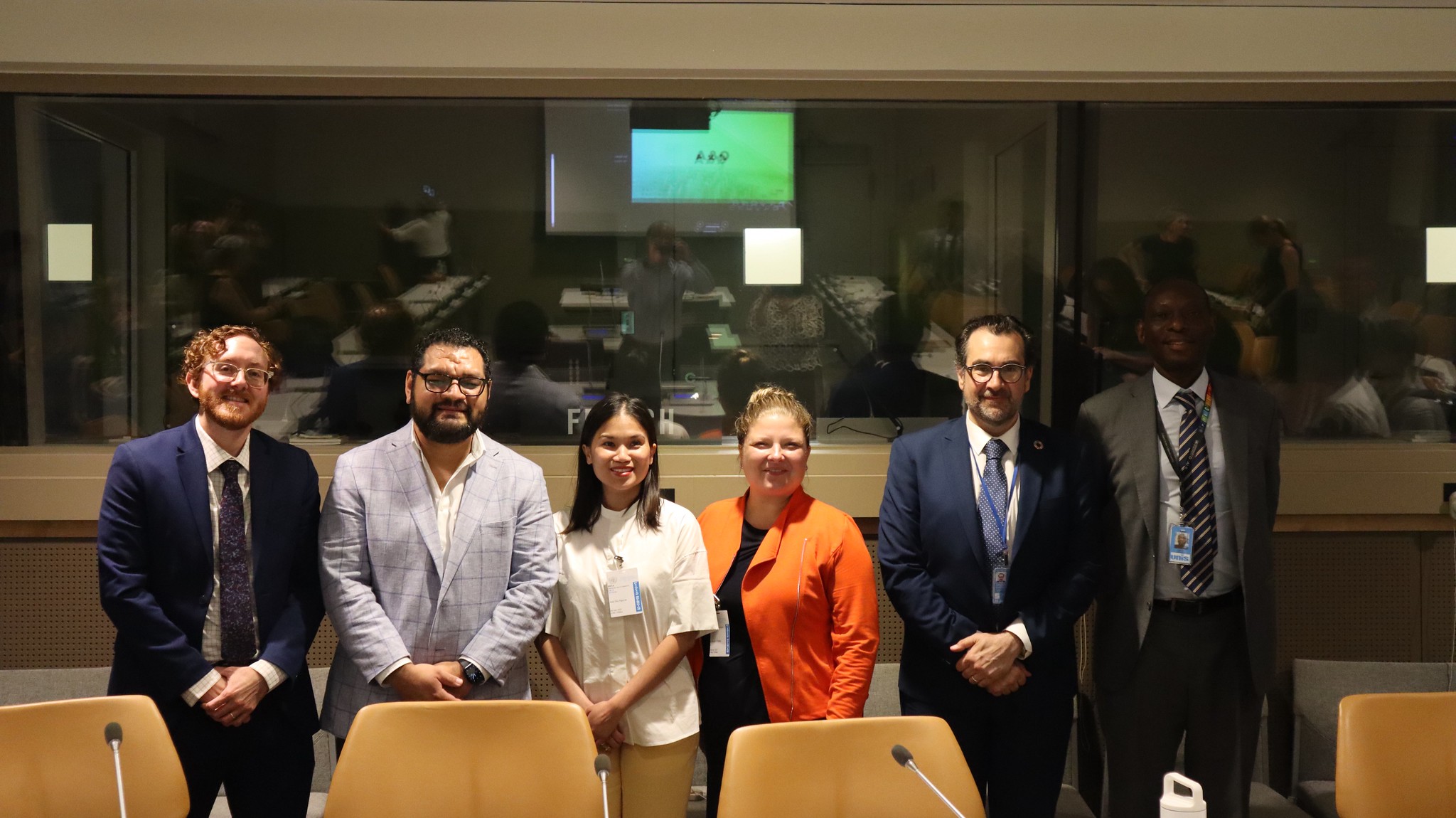
The event included two thematic panels. The first highlighted how financial cooperatives are embedding impact across climate resilience, community inclusion, and member empowerment—from Vancouver’s Vancity to Ireland’s credit union networks. The second explored how municipal governments and civil society are fostering worker cooperatives, using New York City as a leading example of inclusive policy innovation. International perspectives were also spotlighted, including a compelling presentation by João Martins of UNI CAFES (Brazil), who shared how family farming cooperatives in Brazil are advancing climate justice, food security, and rural transformation.
The celebration underscored that cooperatives are not peripheral actors—but essential engines of social progress and sustainable development. As the world prepares for the Second World Summit for Social Development (4–6 November 2025, Doha), the cooperative model continues to prove that economic success can be rooted in solidarity, dignity, and inclusion.
“This is an important moment for cooperatives to demonstrate their unique value in accelerating social development”, said Mr. Katoanga. “Let us together support and leverage the cooperative model to build a more just, inclusive, and sustainable world for generations to come.”
For the first time, the 63rd session of the United Nations Commission for Social Development (CSocD63), held from 5 to 14 February 2025, featured a dedicated session on the role of cooperatives and the Social and Solidarity Economy (SSE). The multi-stakeholder panel, Promoting Solidarity and Social Cohesion through Cooperatives and the Social and Solidarity Economy as a Path to Achieving the SDGs, highlighted the continued expansion of cooperatives and SSE enterprises, reinforcing their contributions to national efforts toward sustainable development. Moderated by Konstantinos Papadakis, Principal Social Affairs Officer, UN Department of Economic and Social Affairs (UN DESA), the panel featured distinguished speakers including representatives of Mongolia, Paraguay and France.
H.E. Carlos Jorge Paris Ferraro, Vice Minister of Social Policies from Paraguay, highlighted the deep historical roots of social and solidarity economy (SSE) values in Paraguay, particularly within indigenous communities. Today, the SSE spans multiple sectors, contributing approximately 12% of the national GDP. In 2024, the Ministry of Social Development established a dedicated SSE department to support sectoral growth and foster partnerships with academia.
Ankhbayar Nyamdorj, Permanent Representative of Mongolia to the UN, underscored Mongolia’s long-standing commitment to the cooperative movement at the international level, dating back to 1969 as the main sponsor of UNGA resolutions on cooperatives and the SSE. He referenced a forthcoming ILO assessment on Mongolia and outlined recent policy initiatives, including the creation of the National Committee on the Intersectoral Cohesion of the New Cooperative Movement under the Deputy Prime Minister. Mongolia has also invested over $200 million in loans benefiting more than 20,000 herders, alongside ongoing capacity-building programs and information campaigns. Looking ahead, he emphasized the importance of regional engagement, youth involvement, and exploring public-private partnerships.
Maxime Baduel, Ministerial Delegate for the Social and Solidarity Economy from France, emphasized the SSE’s role in addressing global challenges. He reaffirmed the significance of SSE resolutions in defining the sector at the international level and reinforcing its contribution to sustainable development. He also noted the EU’s regional agenda for SSE development. In France, the SSE accounts for 10% of GDP, 14% of private employment, and engages 22 million volunteers. He stressed that the SSE does not aim to replace public or private initiatives but serves as a vital grassroots force and a resource for public action.
During the interactive debate, government representatives and other stakeholders discussed practical strategies such as developing supportive legal frameworks, promoting comprehensive and internationally comparable statistics for the SSE, integrating SSE principles into educational curricula and research agendas, and enhancing the participation of SSE actors in national and global policymaking. The insights and recommendations emerging from this forum will inform broader global discussions at the 2025 High-Level Political Forum and help shape a renewed consensus at the upcoming Second World Summit for Social Development in Doha.
The International Cooperative Alliance (ICA), a COPAC member, was represented at the session by its Director of Policy, Joseph Njuguna, who emphasized the essential role of cooperatives in advancing social justice, empowering communities, and reducing inequalities. Mr. Njuguna highlighted ICA’s efforts to mobilize cooperative leaders through a Global Cooperative Charter and Commitment Plan and the IYC National Mechanisms which demonstrate how cooperatives can collaborate with governments, the UN, and other stakeholders to implement social policies, reduce inequalities, and strengthen economic democracy—contributing to accelerating the achievement of the Sustainable Development Goals.
“The International Year of Cooperatives (IYC2025) is a testament of the UN’s and global recognition of cooperatives’ critical role in sustainable development, social inclusion, and economic resilience. We look forward to deepening partnerships with the UN, governments, and key stakeholders to expand the impact of cooperatives, particularly through national mechanisms supporting the IYC2025 initiatives.”
Joseph Njuguna, Director of Policy, ICA).
In closing the discussion, Konstantinos Papadakis (Principal Social Affairs Officer, UN Department of Economic and Social Affairs, UN DESA), emphasized the importance of specific legal frameworks for fostering the growth of this SSE sector, the development of comprehensive, internationally comparable statistics on SEE, education and capacity-building supporting the SSE, and engagement of SSE actors in national policymaking processes, as critical to its success. Finally, he noted the important link between cooperatives and SSE enterprises to the forthcoming United Nations Social Summit. “As we are heading towards the Second World Social Summit in Doha, actions to promote the SSE and cooperatives will be key to addressing gaps in the implementation of the 1995 Copenhagen Declaration, but also in aligning our efforts with the 2030 Agenda for Sustainable Development.”
The United Nations Department of Economic and Social Affairs (UNDESA) and the Committee for the Promotion and Advancement of Cooperatives (COPAC) held a soft launch event for the 2025 International Year of Cooperatives on July 9 at the UN Headquarters in New York. The event brought together representatives from various countries, cooperative organizations, and UN agencies to discuss the role of cooperatives in sustainable development and the plans for celebrating the International Year.
The event highlighted the diverse contributions of cooperatives across sectors, including agriculture, finance, housing, healthcare, and renewable energy. Representatives from different regions shared their plans for establishing national committees, engaging with governments, and promoting cooperatives through various activities and initiatives during the International Year.
The event began with opening remarks from representatives of the United Nations, including Simael Isham from the International Labour Organization (ILO), and keynote addresses from ambassadors and representatives of Mongolia, Kenya, India, and the International Cooperative Alliance (ICA). They emphasized the importance of cooperatives in building a better world, addressing global challenges, and achieving the Sustainable Development Goals (SDGs). The speakers highlighted the contributions of cooperatives in various sectors and called for increased support and recognition for the cooperative movement.
John Wilmoth, Director of the UNDESA Division for Inclusive Development, discussed the role of cooperatives in supporting the implementation of the SDGs, particularly in reaching marginalized groups such as persons with disabilities, youth, and indigenous peoples. He emphasized the need for cooperatives to engage in outreach and community engagement to raise awareness and extend their impact.
Representatives from various cooperative organizations and countries shared their plans for celebrating the International Year of Cooperatives in 2025. These included establishing national committees, organizing awareness campaigns, advocating for supportive policies and legal frameworks, promoting cooperatives in education and among youth, and hosting regional and international events. The global launch of the International Year is scheduled for November 2024 in New Delhi, India, hosted by IFFCO.
Representatives from cooperative organizations in different regions, including Latin America, Asia-Pacific, Europe, and North America, shared their perspectives and plans for the International Year. They highlighted the challenges faced by cooperatives, such as lack of awareness and legal barriers, and discussed strategies to address these challenges. The importance of engaging youth, promoting education, and leveraging technology was emphasized. For more information about the soft launch event for the 2025 International Year of Cooperatives, please visit: https://social.desa.un.org/issues/cooperatives/events/international-day-of-cooperatives-9-july-2024
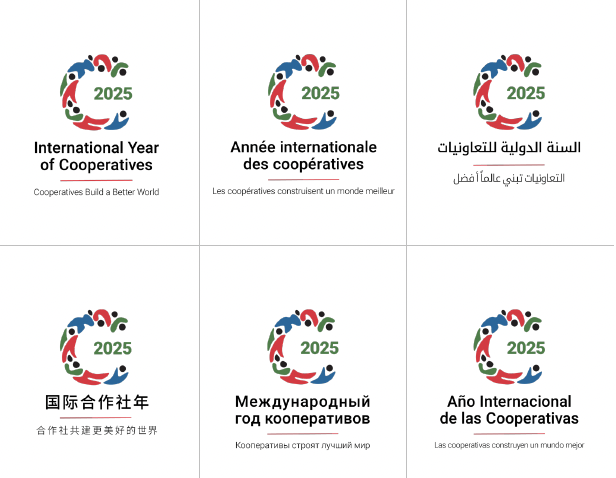
The United Nations Committee for the Promotion and Advancement of Cooperatives (COPAC) is proud to announce the launch of the official logo for the International Year of Cooperatives (IYC2025). The logo, now publicly available, symbolizes the power of cooperatives to unite people around the world under the theme, “Cooperatives Build a Better World.”
The theme, which was announced earlier this year, highlights the crucial role that cooperatives continue to play in addressing global challenges and advancing the United Nations Sustainable Development Goals (SDGs) by 2030. The International Year of Cooperatives 2025 is set to spotlight how the cooperative model offers solutions that contribute to more equitable, inclusive, and sustainable development across the globe.
The IYC2025 Logo
The IYC2025 logo features a vibrant, interconnected design of people from diverse communities uniting to create positive change. The three key colors—red, blue, and green—are inspired by the SDG visual identity, representing cooperatives’ contributions to social, economic, and environmental sustainability. These colors encapsulate the triple bottom line that cooperatives work towards: people, planet, and prosperity. The words “International Year of Cooperatives” appear prominently below the logo, alongside the year “2025,” symbolizing the global reach and significance of this landmark year for the cooperative movement.
“The International Year of Cooperatives 2025 is a time for both celebration and action. Cooperatives embody a model of enterprise and community where inclusion, empowerment and societal resilience are just as valued as revenue and gain. Cooperatives have and will continue to be drivers of poverty eradication, women’s empowerment and social inclusion, while supporting full and productive employment and generating sustainable economic growth. Together, let’s show the power of cooperation to create lasting transformative change.” – Li Junhua, USG for Economic and Social Affairs, Department of Economic and Social Affairs
Guidelines for Logo Usage
Organizations interested in using the IYC2025 logo must adhere to specific guidelines provided by COPAC and the United Nations. The logo is available in six official languages—English, French, Spanish, Arabic, Chinese, and Russian—and can be requested for use through the official online application form.
Non-UN entities wishing to utilize the IYC2025 logo for any purpose, please follow these steps:
Review the Branding Guidelines: Before applying, carefully read the guidelines to ensure proper use of the logo.
Submit an Application: Complete and submit the application form, which will be reviewed by the IYC Secretariat.
Sign the Waiver of Liability: As part of the process, you will need to sign and submit a waiver of liability.
Wait for Approval: The approval process typically takes one to two weeks.
Receive the Logo Files: Once approved, you will be provided with the logo files to use in your materials throughout 2025.
By following these steps, you can ensure your organization’s compliant use of the IYC2025 logo.
For more information on how to apply for logo use, or to access the branding guidelines, please contact the IYC Secretariat at copac@copac.coop.
Upcoming IYC2025 Website
COPAC is also developing a dedicated website for the International Year of Cooperatives 2025, set to launch in November 2024. The website will serve as a hub for all IYC2025-related activities, providing resources, updates, and tools for cooperatives and partners across the world. Stay tuned for more information as the year-long celebration approaches.
Join Us for the Official Launch
The official launch of IYC2025 will take place during the ICA Global Cooperative Conference and General Assembly in New Delhi, India, from 25-30 November 2024. This event will bring together global leaders and cooperative pioneers to kick off a year of celebration, reflection, and strategic action aimed at strengthening the cooperative movement worldwide.
In line with the cooperative ethos of collaboration, IYC2025 will focus on:
Raising awareness about the impact of cooperatives on sustainable development.
Supporting capacity-building, knowledge-sharing, and partnerships to foster growth in the cooperative sector.
Advocating for policies and legal frameworks that support cooperatives as key drivers of inclusive economic development.
Inspiring youth to join the cooperative movement and amplify the positive impact cooperatives have on communities.
The Legacy of the International Year of Cooperatives
The United Nations first declared 2012 as the International Year of Cooperatives, underscoring the sector’s significant contributions to socio-economic development, poverty reduction, and employment creation. The theme of the 2012 IYC—Cooperative Enterprises Build a Better World—remains a rallying call, now carried forward with renewed inspiration for 2025.
As we prepare for this global milestone, COPAC invites cooperatives, Member States, and stakeholders to mobilize their communities and leverage this year to highlight the vital role that cooperatives play in building a more just, sustainable, and inclusive world.